


The moment you strap one of these devices onto your head, you won’t even recognize your own hands. Reality, as we know it, is officially being erased and rewritten. The next generation of VR headsets isn’t just coming to play games; they are coming to hack our brains and trap us completely in breathtaking alternative universes.
To be completely honest with you, sometimes I get genuinely scared when I see the sheer speed of this technological evolution. Will the physical world eventually be forgotten? We are no longer just talking about holding plastic controllers and swinging virtual swords. The tech giants are now manufacturing hardware that directly appeals to our nervous system. I literally got goosebumps researching these incredible machines. They read every micro-movement of your pupils, instantly copy your subtle facial expressions onto virtual avatars, and even trick your brain into feeling the physical touch of a digital world.
The idea of sitting in my completely ordinary room and suddenly finding myself standing on the dusty surface of Mars or floating at the bottom of the Mariana Trench officially makes me feel like I am living right in the middle of a dark, thrilling science fiction movie.
I am Ugu. I spend my days exploring the deepest mysteries of this crazy technology landscape for you. Today, I want to share the immense surprise and excitement I felt while counting down the ten most flawless virtual reality headsets on the market. If you are ready for this revolution to begin, let’s dive right in.
10. Meta Quest 3S: The Gateway to the Metaverse

Meta is absolutely determined to get a virtual reality headset into every single living room on the planet, and the Quest 3S is their Trojan horse.
- Under the Hood: Powered by the Snapdragon XR2 Gen 2 processor and 8GB of RAM.
- The Price: A highly accessible $299.
- The Pros: The mixed-reality color cameras are a game-changer. You don’t have to take off the helmet to see the outside world. I love the idea that you can casually sip your morning coffee while watching a YouTube video on a giant, floating virtual screen right in the middle of your kitchen.
- The Cons: To keep the price down, Meta opted for older, thicker fresnel lenses. This makes the physical device a bit bulky on your face. The battery also taps out after about two and a half hours.
Ugu’s Take: I really appreciate Meta’s affordable price strategy here. Getting millions of people into VR is essential for the industry to grow. However, those bulky lenses do sadden me a bit when I look at how sleek other headsets are getting.
9. Samsung Galaxy XR: The Android Monster Awakens

This is the absolute strongest answer the Android ecosystem has given to Apple’s dominance. Samsung, Google, and Qualcomm have joined forces and officially created a digital monster.
- Under the Hood: A beefy Snapdragon XR2+ Gen 2 paired with a massive 16GB of RAM.
- The Price: Estimated around $1,200.
- The Pros: Flawless eye-tracking combined with ultra-sharp 3K Micro-OLED screens. When I looked into how this works, I was fascinated. Navigating through operating menus just by looking at them feels almost like you possess telepathy.
- The Cons: With all that raw power, the battery life suffers, lasting an average of just two hours.
Ugu’s Take: The seamless Android integration is what excites me the most here. If you are already living in the Samsung/Google ecosystem, this headset is going to feel like a natural, albeit mind-blowing, extension of your phone.
8. Apple Vision Pro: The Spatial Computing Pioneer
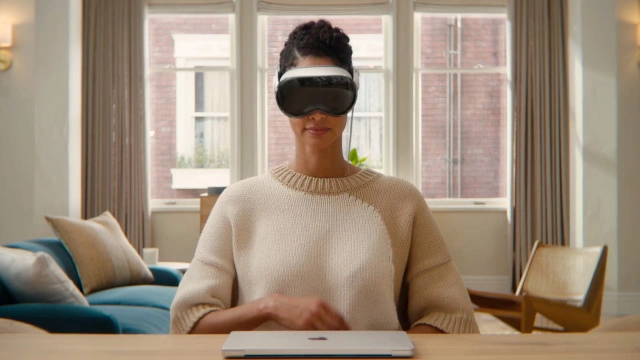
Apple refuses to call this a VR headset; they insist it is a “spatial computer.” And honestly, looking at the specs, they might be right to invent a new category.
- Under the Hood: The unbelievably powerful M5 and R2 dual-chip setup with 16GB of RAM pushing 23 million pixels.
- The Price: A staggering $3,500.
- The Pros: It possesses arguably the best screen quality on the consumer market. Suspending multiple high-definition applications in the air simultaneously around your physical room is surreal. Plus, there are no controllers. Managing everything purely with your hand gestures and eye movements feels like absolute magic to me.
- The Cons: It is incredibly front-heavy, and that external battery pack tethered by a wire only gives you two hours of juice.
Ugu’s Take: At three and a half grand, I still think this technology is a high-end luxury rather than a consumer staple. It is a brilliant glimpse into the future, but my neck aches just thinking about wearing that heavy glass and aluminum shield for too long.
7. Valve Steam Deckard: The PC Gamer’s Dream
Produced by the legendary computer game company Valve, the headset currently codenamed “Deckard” is built to push the limits of wireless gaming.
- Under the Hood: Features a bleeding-edge Wi-Fi 7 chip for zero-latency wireless data transfer.
- The Price: Expected around $1,200.
- The Pros: It offers a buttery smooth 144Hz refresh rate, flawless eye tracking, and Valve’s notoriously perfect controllers. Being able to play incredibly heavy, photorealistic PC VR games completely wirelessly is a massive leap.
- The Cons: You need a ridiculously powerful (and expensive) gaming PC sitting in your house to actually get this full performance. The headset is just the messenger.
Ugu’s Take: I get incredibly impatient just imagining playing games with that level of fluidity without tripping over a thick display cable. If you have the PC to power it, this will be the holy grail.
6. PlayStation VR2: The Haptic Masterpiece

Sony didn’t just build a screen for your face; they built a sensory feedback machine.
- Under the Hood: Dual 4K HDR OLED screens that produce colors so vibrant they practically blind you.
- The Price: $549 (plus the cost of a PS5 or PC).
- The Pros: The special vibration motors built directly into the helmet are mind-blowing. When a bullet passes by your head in a game, you physically feel the wind and the vibration rattling your skull. Plus, Sony finally added official PC support!
- The Cons: It is unfortunately tethered. That thick cable connecting you to the console or PC can easily get tangled around your feet during intense moments.
Ugu’s Take: Yes, the wire is annoying, but on the flip side, you have zero charging worries. You can play endlessly. For the price, I think this specific gaming experience is tremendous and unmatched in sensory feedback.
5. Pico 4 Ultra: The Ergonomic Champion

Pico is Meta’s biggest global competitor, and they have figured out something crucial that many others missed: comfort.
- Under the Hood: Powered by the Snapdragon XR2 Gen 2 with 12GB of RAM.
- The Price: €619.
- The Pros: The design is absolute perfection. By moving the heavy battery to the back of the head strap, the weight distribution is perfectly balanced. It doesn’t pull your face down at all.
- The Cons: Their standalone application library is still struggling to catch up to Meta’s massive store.
Ugu’s Take: I can easily use this for hours without suffering from that dreadful VR neck pain. I really respect this hardware balance. If Pico can secure more exclusive games, they will be a massive threat to the Quest line.
4. Meta Quest Pro 2: The Virtual Office Revolution

This is Meta’s top-tier device, specifically engineered not for gaming, but for the corporate business world and high-end professionals.
- Under the Hood: Packed with 16GB of RAM and dual 4K resolution panels.
- The Price: $1,499.
- The Pros: The internal sensors are terrifyingly accurate. They instantly transfer every single facial expression—every subtle smile, raised eyebrow, or frown—directly to your avatar in the virtual world in real-time.
- The Cons: Once again, the battery tapers off around the two-hour mark, which isn’t great for an 8-hour workday.
Ugu’s Take: I feel a bit overwhelmed thinking about the idea of throwing my physical desktop monitors in the trash and working entirely surrounded by floating virtual screens in a metaverse office. But make no mistake, the future of remote work is heading exactly there.
3. Bigscreen Beyond: The Featherweight Miracle

This isn’t just a headset; it’s a personalized piece of hardware built exclusively for your face.
- Under the Hood: Stunning Micro-OLED screens packed into the smallest form factor possible.
- The Price: $999.
- The Pros: It is the lightest PC VR headset in the world, weighing an absurdly light 127 grams. How? By having you scan your face with an iPhone app, they 3D-print a custom facial interface that perfectly matches your bone structure. It fits like a glove and blocks out 100% of the light.
- The Cons: It has zero inside-out tracking. It requires external base stations, separate controllers, and a permanent cable connection to a PC.
Ugu’s Take: I literally fell in love with the idea of watching full-length movies on a giant IMAX-sized screen in VR for three hours without feeling a heavy brick resting on my cheekbones. Comfort is king here.
2. HTC Vive XR Elite: The Transformers of VR

HTC has delivered a complete industrial design marvel with this modular approach to virtual reality.
- Under the Hood: Standalone processing capabilities with full PC streaming support.
- The Price: $1,099.
- The Pros: It is entirely modular. If you are tired of the heavy battery pack resting on the back of your head, you can completely unclip it and attach normal glasses stems. It suddenly transforms from a bulky helmet into a pair of slightly thick sunglasses! It even features built-in diopter dials so you can adjust the lens focus if you wear prescription glasses.
- The Cons: The internal standalone processor falls a bit behind the competition considering the premium price tag.
Ugu’s Take: I genuinely liken this transformable structure to a Transformers movie. The ability to snap parts on and off depending on whether you are sitting on a couch or moving around a room is incredibly innovative.
1. Varjo XR-4: Welcome to the Matrix

We have reached the absolute peak. This device is not designed for standard gamers; it is built entirely for massive enterprise companies, fighter pilot simulations, and elite industrial design.
- Under the Hood: True human-eye bionic display technology.
- The Price: A wallet-destroying $3,990.
- The Pros: It possesses crazy retina-level screens that offer the exact same visual resolution as the human eye. When you put these glasses on, you literally cannot distinguish the real world from the virtual one. Seeing a physical pixel is impossible.
- The Cons: You need a massive computer setup—something akin to a space shuttle’s control room—to run it, and the headset itself is heavily tethered and incredibly weighty.
Ugu’s Take: I was utterly speechless researching the Varjo XR-4. This isn’t just a gadget; this technology is officially the beginning of The Matrix. It proves that photo-realism in virtual reality isn’t a dream for the year 2050; the hardware exists right now.
So, that is the current state of our reality. Technology has gone completely crazy, and these virtual worlds are rapidly getting ready to swallow our physical existence whole. Sometimes, I am genuinely scared by the speed of it all—it feels like baseline reality is slipping away. But on the other hand, my inner tech-geek simply cannot sit still from the excitement of exploring these vast new universes.
I want to know where you stand on all of this. Which of these headsets is your absolute favorite? Do you lean towards the budget-friendly, practical devices that you can use every day, or are you dreaming of strapping that ultra-luxury, reality-erasing hardware to your face? Share your thoughts with me in the comments below, let’s discuss our future!